Is 64GB RAM Overkill for Gaming?
Is 64GB RAM overkill for gaming in 2026? This is one of the most common questions people ask when building or upgrading a gaming computer. Many new computers are advertised with huge amounts of memory, almost as if it is required just to play modern games. This naturally makes people wonder if buying more memory will make their games run faster, smoother, or last longer without needing another upgrade.
The real answer is a lot more practical than the advertising might suggest. In this guide, we will look at how much memory games actually use, when a large amount of memory truly helps, and how to choose the right amount for the way you actually use your computer. We will keep everything simple and easy to follow.
What Does RAM Actually Do for Gaming?
Before answering the main question, it helps to understand what memory, often called RAM, actually does. RAM temporarily stores information that your computer needs quick access to while a program is running, like your game, your web browser, or any other open software.
Think of RAM like a desk. A bigger desk lets you spread out more papers and work on more things at once, without needing to put things away first. If your desk is too small, you constantly have to pack things away and pull new ones back out, which slows everything down.
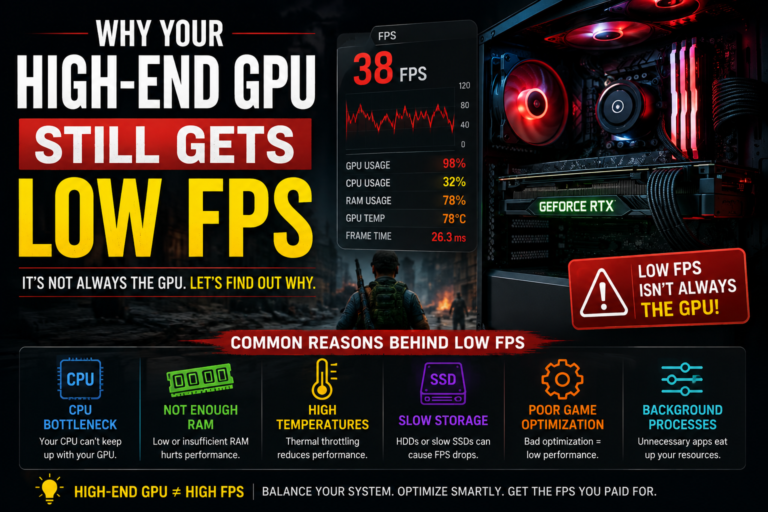
When your computer runs out of available memory, it has to use your storage drive as a kind of emergency backup space. This process is much slower than using real memory, and it is often the true cause of stuttering and slowdowns people blame on other parts of their computer.
How Much Memory Do Modern Games Actually Use?
This is where the real answer becomes clear. Across many recent, demanding games, including large open-world titles, memory usage tends to fall within a fairly predictable range.
Fast, competitive online games typically use a smaller amount of memory. Most modern, big-budget games use a moderate amount. Even some of the heaviest, most demanding open-world and simulation games rarely use an extremely large amount of memory during actual gameplay.
In almost all cases, even very demanding modern games stay well below the amount of memory found in a large 64GB kit. This means a large portion of that memory often goes completely unused during pure gaming sessions.
What Happens If You Do Not Have Enough Memory?
A computer with a smaller amount of memory can usually still run most games without a major problem. But once your game, your operating system, and any background programs fill up that available space completely, your system is forced to rely on your storage drive as a substitute.
This often leads to noticeable stuttering during gameplay, longer loading screens, uneven frame timing, and slower switching between different programs or browser tabs.
This is exactly why many people notice a real, meaningful improvement when moving from a smaller amount of memory to a moderate amount. The system stops struggling to find space and starts running much more smoothly overall.
Why Your Graphics Card Also Matters Here
System memory does not work completely on its own. It also supports your graphics card, especially when that graphics card has a limited amount of its own dedicated memory.
When a graphics card runs low on its own memory, some game textures and visual assets can spill over into your regular system memory instead. This increases how much system memory your game actually needs, and it can make stuttering or frame timing issues worse than they would otherwise be.
Because of this connection, a graphics card with a smaller amount of dedicated memory tends to benefit more from having a moderate amount of extra system memory available. A graphics card with a larger amount of its own dedicated memory relies much less on your system memory to make up the difference.
When Does Real-World Gaming Use More Memory?
Playing a game by itself rarely uses an extremely large amount of memory. But real-world computer use often looks quite different from a simple, single-task gaming session.
Memory demand increases noticeably when you are gaming while also running a voice chat program and several browser tabs at the same time. It increases further if you are recording or streaming your gameplay while playing. Using heavy visual modifications or texture packs also raises memory demand, as does running photo or video editing software in the background while gaming.
In these more demanding, multitasking situations, your computer needs to hold your game, your background programs, and various temporary files all at the same time, which is exactly where having a larger amount of memory starts to become genuinely useful.
Comparing Different Memory Amounts for Gaming
It helps to compare a few common memory amounts directly, based on how they actually perform for different types of use.
A smaller amount of memory works reasonably well for budget gaming, competitive titles, and lighter big-budget games, but it often leaves very little extra room for multitasking, which can lead to occasional stuttering.
A moderate amount of memory comfortably handles modern, demanding games, along with typical background programs, while also leaving some safe extra room for the future. For most gaming setups, this amount tends to be the true sweet spot.
A very large amount of memory becomes genuinely useful for streaming, heavy modding, creative work, and serious multitasking, but for pure gaming alone, it typically does not lead to any noticeable increase in performance.
Is 64GB Overkill for Pure Gaming?
For pure, dedicated gaming, the honest answer is yes, in most cases.
If your computer is used mainly for playing games, chatting with friends, and light browsing, a very large amount of memory will not increase your frame rate, will not improve your visual quality, and will not meaningfully shorten your loading times. Once your system already has enough available memory, your real performance depends much more on your processor, your graphics card, and your storage drive speed instead.
In most gaming-focused computers, a large portion of that extra memory simply sits unused, quietly waiting for a task that never actually comes.
When a Large Amount of Memory Actually Makes Sense
A very large amount of memory becomes genuinely practical once gaming becomes just one part of a bigger overall workload.
It is worth considering a larger amount of memory if you regularly stream or record your gameplay, run recording software with many different sources at once, use very large modification lists or texture packs, keep many browser tabs open while gaming, edit videos or photos, work with creative or development software, run virtual systems, or play large simulation games while multitasking heavily at the same time.
In these specific situations, extra memory genuinely helps prevent slowdowns and keeps your entire system feeling responsive, even under heavy, combined pressure.
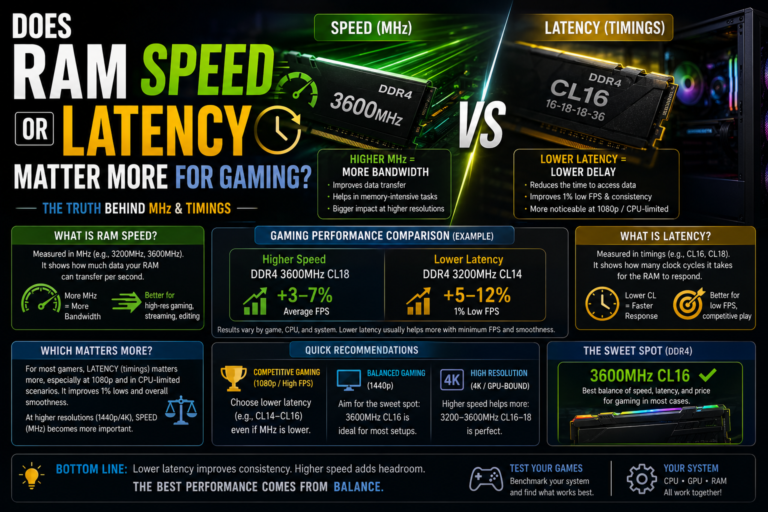
A Quick Note on Memory Speed and Setup
Beyond just the total amount, how your memory is set up also matters for gaming performance.
With newer types of memory, choosing an extremely large capacity can sometimes come with a small trade-off in overall speed or stability, depending on your exact setup. For gaming specifically, once you already have enough total memory, its speed and stability often matter more than simply having an even larger total amount.
For this reason, many gaming systems perform best using two matching memory sticks, rather than four separate sticks, since two sticks are often easier to run stably and can perform just as well, or even better, in many systems.
Where Extra Budget Is Usually Better Spent
If your main goal is genuinely better gaming performance, extra money is often better spent somewhere other than an extremely large amount of memory.
A stronger graphics card, a faster processor, a high-quality storage drive, and improved cooling all tend to have a much more direct, noticeable effect on your frame rate, your loading times, and your overall gameplay stability. Increasing your memory far beyond what your games actually use typically does not deliver the same kind of noticeable, real-world improvement.
How to Decide What Is Right for You
The right amount of memory really comes down to being honest about how you actually use your computer, rather than simply choosing the largest number available.
If you are a dedicated gamer who mainly focuses on playing games without heavy multitasking, a moderate amount of memory is very likely all you truly need. If you regularly combine gaming with streaming, heavy modding, content creation, or other demanding background tasks, a larger amount of memory becomes a genuinely smart and practical investment instead.
Final Thoughts
So, is 64GB RAM overkill for gaming? For most people who use their computer mainly for playing games, the honest answer is yes. Modern games simply do not come close to needing that much memory on their own, and the real, noticeable improvement usually happens when moving from a smaller amount of memory up to a moderate amount instead.
A moderate amount of memory remains the practical, sensible standard for most gaming setups in 2026, comfortably balancing performance, everyday multitasking, and future readiness, all without wasting your budget. A much larger amount of memory only becomes the smarter choice once gaming is combined with streaming, heavy modding, or other serious, memory-hungry tasks. The smartest approach is always to choose your memory based on how you truly use your computer, not simply based on which number sounds the most impressive.