Does RAM Speed or Latency Matter More for Gaming?
Choosing between RAM speed or latency for gaming can feel confusing, especially when you are comparing two memory kits with very different numbers. One kit might show an impressively high speed. Another might show a lower speed but a lower delay number instead. So which one actually matters more for your games?
The honest answer is that neither number tells the whole story on its own. Real gaming performance depends on how these two things work together, not on picking whichever number sounds the most impressive. In this guide, we will explain what each of these terms actually means, how they affect your real gameplay, and how to choose memory wisely without wasting money. We will keep everything simple and easy to follow.
What Is RAM Speed?
RAM speed describes how quickly information can move back and forth between your memory and your processor. You will usually see this shown as a number, and a higher number generally means more information can move each second.
In gaming, a higher RAM speed mainly helps by improving how much data can flow at once. This becomes especially helpful in large open-world games, detailed simulation titles, and fast, competitive games running at very high frame rates.
However, there is an important limit to keep in mind. Once your memory speed reaches a certain practical level, pushing it even higher tends to offer smaller and smaller real-world benefits.
What Is RAM Latency?
RAM latency describes the small delay before your memory actually begins sending the requested information. This is often shown using a specific code, and a lower number generally means a quicker response time.
In gaming, lower latency mainly helps by allowing your memory to respond more quickly to smaller, frequent requests. This often leads to more consistent frame delivery, less small stuttering, and stronger performance during your game’s roughest, most demanding moments.
In simple terms, latency affects how quickly your memory reacts, rather than how much information it can move overall.
Why You Cannot Judge Speed or Latency Alone
This is one of the most important points to understand. A memory kit with a very high speed but a very high delay number can sometimes end up performing similarly to a kit with a much lower speed but a much lower delay number instead.
What truly matters is how quickly your memory can deliver its very first piece of information, once speed and latency are considered together. This combined result is sometimes referred to as real-world responsiveness. Two very different-looking memory kits can actually perform almost identically in games if this combined responsiveness ends up being similar.
This is exactly why smart memory choices focus on finding a good overall balance, rather than chasing the single highest or lowest number available.
Where Does RAM Speed Help the Most?
Increasing your memory speed increases how much total information can move each second, which can genuinely help your processor during memory-heavy moments in a game.
In real gaming systems, a higher memory speed can help improve your lowest, roughest frame rate moments, help smooth out asset loading in large open-world games, and assist your processor during especially demanding calculations.
That said, gaming performance does not keep improving forever as memory speed increases. Once your system reaches a reasonable, practical speed range, the improvements you gain from going even higher become quite small, which is why extremely expensive, extreme memory kits often cost significantly more while changing your actual gameplay very little.
Where Does RAM Latency Matter the Most?
Latency tends to matter most in situations where your processor needs to constantly access many small pieces of information very quickly.
This is especially true in fast, competitive shooting games, detailed simulation and strategy games, large open-world titles, and gaming at very high refresh rates. In these situations, lower latency often improves how smoothly frames are delivered and helps reduce small, frustrating stutters.
This is exactly why fine-tuning your memory’s latency tends to improve your roughest, lowest frame rate moments more noticeably than it improves your simple average frame rate number.
Why Comparing Numbers the Wrong Way Can Mislead You
If you only compare the raw delay number between two different types of memory, you can easily end up with the wrong impression.
Newer generations of memory often show a higher delay number on paper compared to older generations. However, because these newer kits also run at a much higher overall speed, their real-world responsiveness often ends up being just as good, or sometimes even better, than an older kit with a much lower delay number.
This is why looking at the delay number completely by itself can genuinely be misleading. It is always important to consider both speed and latency together, rather than judging either one entirely on its own.
When Does This Actually Affect Your Gaming Performance?
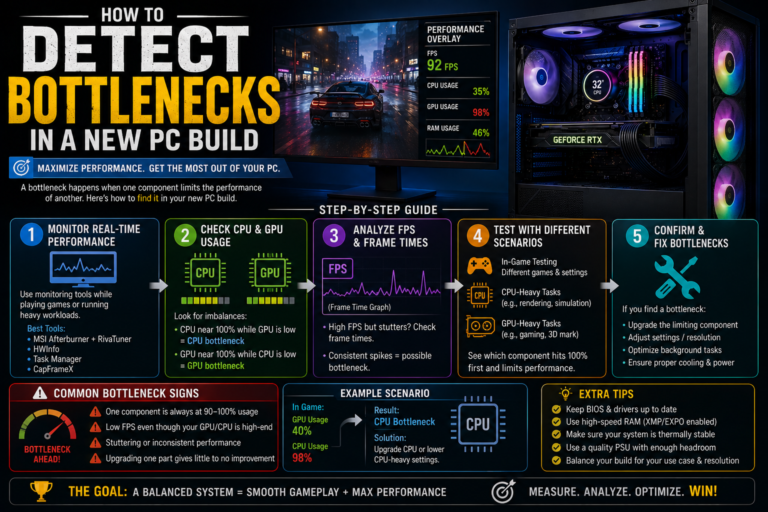
Memory tuning tends to matter the most specifically when your gaming performance is limited by your processor, rather than by your graphics card.
This is especially common in fast, high-frame-rate gaming at lower resolutions, competitive esports titles, detailed simulation games, and large, demanding open-world games. In these specific situations, choosing better-balanced memory can genuinely improve your frame consistency, reduce stuttering, and offer a modest boost to your overall frame rate.
On the other hand, when your gaming performance is mainly limited by your graphics card instead, such as during highly detailed gaming at higher resolutions, changes to your memory setup usually make a much smaller difference, since your graphics card is doing most of the heavy lifting in that particular situation.
How to Choose the Right Memory Without Overspending
Based on general gaming performance trends, here are some practical guidelines worth following.
Choose a well-established, proven speed range rather than chasing the most extreme option available. Avoid extremely expensive, top-tier kits unless their price happens to be very close to a more standard option anyway. Use two matching memory sticks rather than four separate ones, since two sticks are often easier to run stably. Make sure to enable your system’s memory speed setting within your basic system settings, since it is sometimes left off by default. And overall, prioritize genuine system stability over chasing very small, marginal performance gains.
Following this kind of balanced approach delivers nearly all of the real, practical gaming benefits without unnecessary cost or unnecessary complications.
Common Misunderstandings Worth Clearing Up
There are a few common misunderstandings that tend to follow this topic around.
Some people believe that a lower delay number always automatically means faster overall memory performance, but this is not entirely true once you consider the memory’s overall speed as well. Some people believe that a higher speed number always brings large, dramatic frame rate improvements, but in reality, the gains become quite small after a certain practical point. And some people believe that upgrading their memory can fix a graphics card limitation, but in reality, overall gaming performance always depends on how your entire system works together, not on any single part alone.
What This Means for Different Types of Gamers
If you play mostly fast, competitive games and care deeply about the smoothest, most consistent frame delivery possible, paying closer attention to a well-balanced combination of speed and latency can genuinely be worthwhile.
If you mainly play visually detailed games at higher resolutions, your memory choice matters considerably less, since your graphics card will likely be doing most of the real performance work in that specific situation.
And if you are simply building a well-rounded, general gaming computer, choosing a proven, reasonably priced, balanced memory kit will comfortably cover the vast majority of your real-world gaming needs without requiring you to overthink every single number involved.
Putting Speed and Latency Into Perspective
It helps to remember that your memory is only one part of a much larger, interconnected system. Your processor, your graphics card, and your memory all need to work well together in order to deliver truly smooth, consistent gaming performance.
Chasing the single highest speed number, or the single lowest delay number, in complete isolation from everything else, rarely leads to the meaningful real-world improvement many people are actually hoping for. A thoughtful, balanced choice almost always serves you better in practice.
Final Thoughts
So, does RAM speed or latency matter more for gaming? The honest answer is that neither one matters completely on its own. Real gaming performance depends on how quickly your memory can move information, combined with how quickly it can begin responding to a request in the first place.
Across most modern gaming setups, the real, noticeable benefit from choosing better memory tends to show up as smoother, more consistent gameplay and stronger performance during your roughest gaming moments, rather than as one huge jump in your average frame rate number. Instead of chasing the highest possible speed or the lowest possible delay number in isolation, choosing a well-balanced, reasonably priced memory kit will deliver nearly all of the real, practical gaming benefits, without any unnecessary extra cost.